Months of Calls Before a Single Yes
Some listings you win on the first call. This one took months.
The owner had fielded offers in 2021 and 2022, back when the market was stronger and the building was in better shape, and those numbers had set his expectations firmly. He wasn’t unreasonable. He was anchored to a version of his property that no longer existed. Getting him to engage took more than persistence. It took credibility.
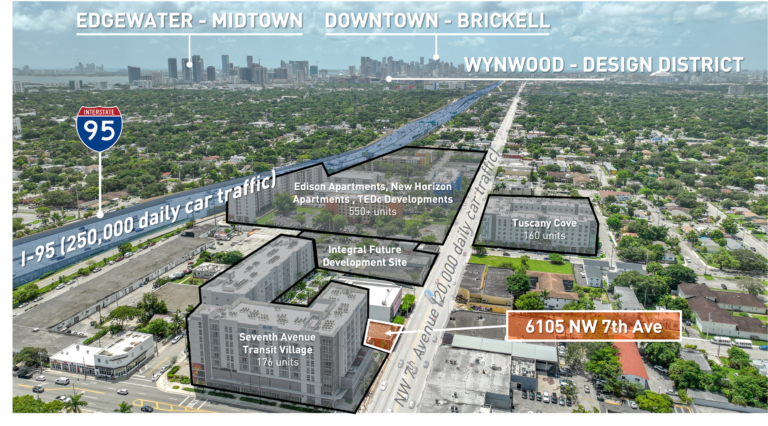
What moved him in the end was a deal he already knew about. I had sold 6105 NW 7th Ave, a comparable building in similar condition five blocks down the same corridor. He had seen how it was positioned and what it closed for. That track record was the difference. He gave me the listing.
A Price at the Top of the Range
We listed at $1,100,000. That was a top-range ask, priced with room to negotiate and built on the assumption that the 40-year recertification had been completed. He believed it had been handled. Had that been true a serious buyer moving on schedule should have closed this around $900,000.
Honestly, the real value was nearer $750,000 than $900,000. The gap between those numbers wasn’t just the condition of the building. It was what a seller can hold out for when a buyer is performing, and what a seller will take when one isn’t.
What the Recertification Actually Required
The structural condition was never a secret. It showed on tours. The first buyer’s own general contractor walked the building and documented it. Everyone understood this was a value-add asset that needed real work, and the pricing conversation had always been on those terms.
What was unresolved was the 40-year recertification. The engineer we brought in to advance it was the same one who had inspected the building three years earlier, so he knew the property and his prior report had laid out the work required. He was the obvious choice to carry it across the line.
Going back in, he noted a gap in that earlier report. He had never gotten into the second unit, which hadn’t been disclosed to him and to which he hadn’t been given access, so he had certified what he was shown. You can only inspect what you can reach. Seeing it now, his position was that he could pass the building conditionally, on the basis that the structural repairs would be completed as part of the interior renovation any buyer was going to undertake anyway.
So there was a path. It needed sequencing and follow-through, not a rescue.
The Exit That Wasn’t
The first buyer missed closing. Three months of extensions and diligence that never finished, and then they moved to terminate and recover their deposit, citing the structural conditions, a week after the scheduled closing date.
Conditions their own contractor had documented before they ever opened escrow. Nothing had been concealed and nothing had changed. They had priced this building knowing exactly what it was, then tried to use what they already knew as grounds to walk.
That wasn’t going to hold. It didn’t.
The Week It Almost Ended Twice
Midway through the listing, a bathroom pipe burst and flooded several rooms. Cleanup, remediation, one more thing to manage while a buyer was still in contract and the recertification was still unresolved.
Then the owner passed away, just before the scheduled closing and before he could see it through.
The property went to his family, who inherited the asset and everything attached to it: liens for non-compliance, an incomplete certification, a failed contract, and a cleanup that had just wrapped. What they also inherited was a legal position. The buyer had missed closing with no valid grounds to terminate, and that gave us standing to hold the deposit and move forward without conceding anything to a party who hadn’t performed.
Rebuilding the Deal
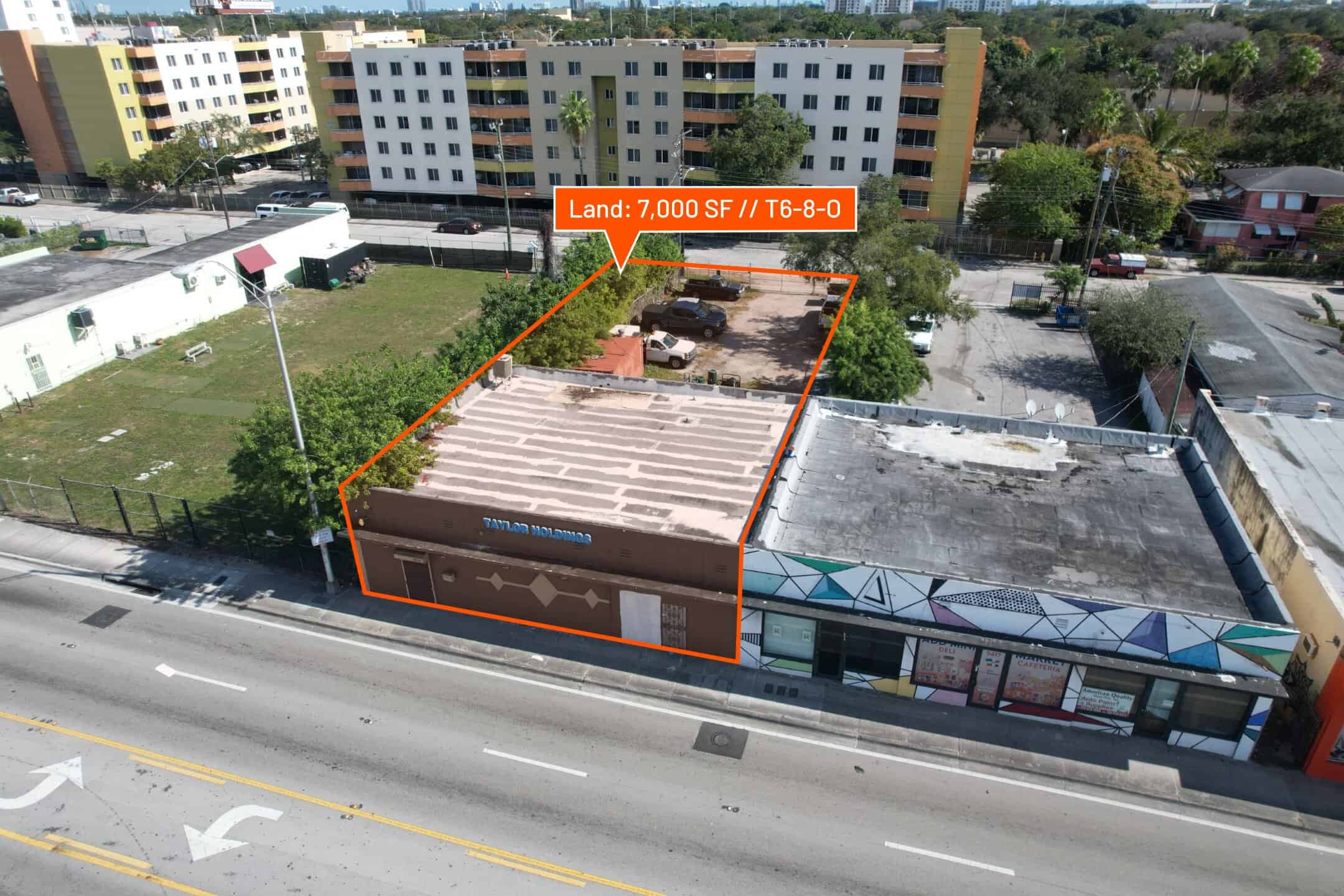
Then a 1031 exchange buyer came in who understood exactly what they were looking at. A T6-8-O lot in Liberty City, 8,700 SF of land permitted for twelve stories of mixed-use, structural work priced in, full disclosure and a clear path to close. They took on the recertification themselves, which made sense: they were renovating the interior anyway, and the conditional pass was written around exactly that work.
We repriced to $750,000. That wasn’t a concession extracted by a difficult buyer. It was the number the asset supported, offered to someone who could actually close on it, quickly, without relitigating a condition they had already accepted.
City and county officials worked directly with the title company to structure the lien resolution as part of the closing rather than a precondition to it. That took several weeks of follow-through across multiple fronts, and it was the piece that made the whole thing closeable.
After a failed contract, that’s what the family was buying: certainty. A seller who has just lost three months to someone who couldn’t perform will trade the last hundred thousand for a buyer who will.
How It Closed
We closed in March 2026 at $750,000, with the lien issues resolved through the title company at the table.
The family got out from under a property that had become an ongoing source of difficulty during an already painful stretch. The buyer picked up a mixed-use development site with the structural work priced into their basis and a recertification path already mapped. No surprises on either side.
What Every Distressed Seller Needs to Hear
A property with title clouds, structural problems and a failed contract isn’t unsellable. It’s mispriced for the wrong buyer.
The harder lesson is what an un-serious buyer actually costs. Not the three months, though that hurt. The difference between $900,000 and $750,000 is roughly what the seller gave up for a counterparty who would perform, and by the time we got there it was worth it. Ask price is a negotiating position. Real value is what someone will close at, and certainty is a line item in that number whether or not anyone writes it down.
This one asked a lot of everyone. Patience from a family navigating grief while managing a complicated estate. Persistence through a buyer who burned three months and a pipe that picked the worst possible moment to fail. Staying in the details long after the straightforward version of this deal had collapsed.
Everything has a price it will trade for. The work is finding it without losing the client along the way.
Deal Summary
- Deal Type: Value-Add Sale
- Asset Type: Office/Retail
- Date: March 2026
- Location: Liberty City, Miami
- Original List Price: $1,100,000
- Transaction Value: $750,000
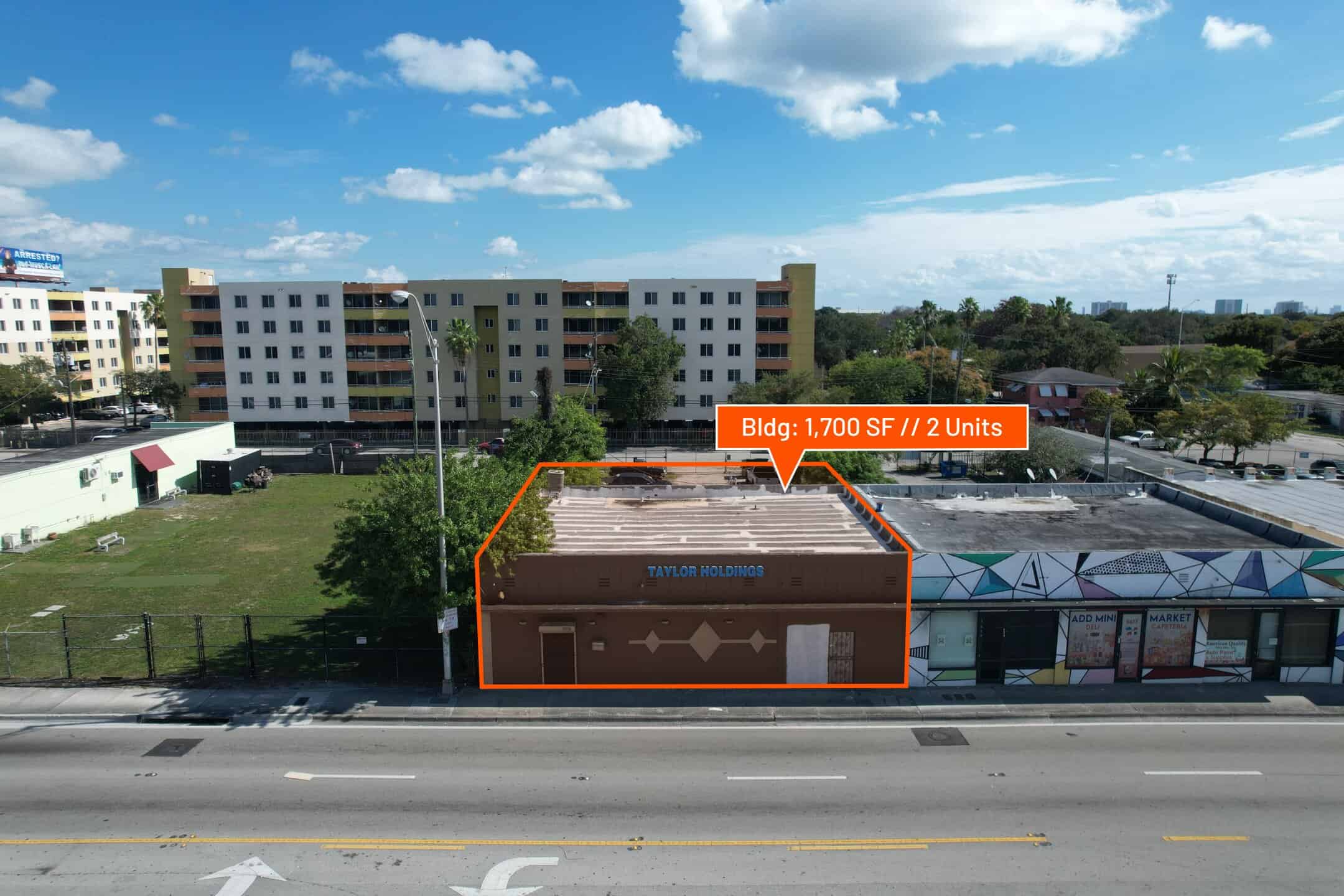
- Building Size: 1,700 SF on 8,700 SF lot, zoned T6-8-O (12-story mixed-use)
- Main Challenge: A buyer who missed closing after three months, then tried to exit on structural conditions their own contractor had documented before escrow opened
- Solutions: Held the deposit on a failed contract, mapped a conditional recertification path, structured lien resolution through the title company at closing, and repriced to real value for a 1031 buyer who could close quickly