Transit Station Neighborhood Development (TSND) Update Spring 2026
The City of Miami passed sweeping zoning legislation on July 24, 2025. If you own or are evaluating property near any Metrorail station, the rules changed. Significantly.
The ordinance is called the Transit Station Neighborhood Development program, or TSND. It amends Miami 21 to allow dramatically higher density and height within one mile of current and future rail stations. Properties once capped at 5 stories can now potentially reach 12, 20, even 24+ stories, depending on location and what the developer commits to delivering.
This is not a minor code tweak. It is a structural shift in how Miami’s urban form develops over the next generation.
What Is a TOD Node, and Why Does It Matter?
Before a property can access TSND development rights, it must first be designated as a Transit Oriented Development (TOD) Node on the City’s future land use map. The designation doesn’t happen automatically. Either the City initiates it, or a developer petitions for it during one of the semi-annual filing windows.
Once a TOD Node designation is in place, densities of 150 to 500 units per acre become possible, and Floor Area Ratios of 11 to 40 unlock intensity levels that dwarf standard Miami 21 allowances.
Little River is currently the only approved TOD Node. It covers a 144-acre tract near the planned transit station. Allapattah is widely expected to follow. After that, similar designations are slated to roll through neighborhoods along the entire Metrorail corridor and future rail lines.
Two Paths: General TSND vs. Enhanced TSND
Once inside a TOD Node, developers choose between two tracks.
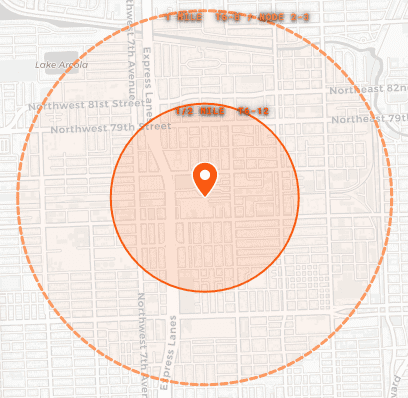
General TSND is built for smaller infill projects. Properties within a half-mile of a station can access T6-12 zoning standards: up to 12 stories by right and 20 stories with bonuses. Properties between a half-mile and one mile access T6-8 standards. No minimum parcel size applies. This path requires filing an Exception application and one public hearing before the Planning, Zoning and Appeals Board.
Enhanced TSND is built for larger plays. Properties of 3 or more acres can pursue a master plan unlocking T6-24b zoning: up to 24 stories by right with further bonus height available. Enhanced projects can waive cross-block passage requirements, reduce minimum parking ratios to 50% of the City’s standard requirements, and include educational uses, outdoor dining, and large-scale retail by right. The tradeoff is a more demanding public benefits package.
The Bonuses Available
Neither path is a free ride. Both require measurable community benefit commitments.
General TSND unlocks:
- Height from 12 stories up to 20 stories with bonuses
- Parking flexibility at T6-8 and T6-12 standards by right
- Residential and mixed-use density well above base zoning
Enhanced TSND unlocks:
- Up to 24 stories by right, with additional stories available through bonuses
- Parking minimums cut to 50% of standard requirements
- Educational facilities, outdoor dining, and large-format retail by right
- Waiver of cross-block passage and minimum building spacing requirements above the podium
The Hurdles You Have to Clear
General TSND requires:
- Pedestrian and mobility connections from the site to a transit stop
- Affordable housing set-asides: minimum 3% of units at below 60% AMI, 5% at below 100% AMI, and 2% at below 120% AMI
- Pre-application meeting with City planning staff
- One public hearing before PZAB
Enhanced TSND requires:
- A contribution toward transit station infrastructure equal to 1.5% of total project cost, or actual construction of station improvements
- Enhanced landscaping, public park space, and improved bike facilities
- Showers, lockers, and bike amenities for residents and employees
- Native specimen street trees exceeding typical city size standards
- Comprehensive urban design compliance: building facades, limited driveway widths, and walkability standards
What’s excluded entirely: T3 (single-family) transect zones cannot participate. Neighborhood Conservation Districts, including all of Coconut Grove, are excluded. Locally designated historic districts, including the MIMO corridor, are excluded. Historic properties elsewhere require a Certificate of Appropriateness from the Historic and Environmental Preservation Board.
What Happened After the Vote
The legislation passed. Then came the controversy.
Reports emerged in late July 2025 that a “substitution memo” signed two days before the commission vote had quietly inserted significant changes into the final ordinance, changes that were never publicly noticed or reviewed. The alterations included doubling the qualifying radius from a half-mile to a full mile for Node 2 and 3 properties, and expanding TSND eligibility to all D1 “Workplace” zoned properties, typically warehouses and light industrial sites where residential construction had previously been prohibited. Little River has a high concentration of both.
City Planning Director David Snow defended the changes, arguing they reflected concepts “originally contemplated” by his team and did not rise to the level requiring re-notice. Critics and legal observers disagreed. Courts have consistently held that changes affecting eligible property categories, density thresholds, or development incentives cross the line from cleanup to material amendment, which state law requires to be re-noticed and voted on twice.
The controversy fueled months of public outrage. Following sustained community pressure, the City Commission moved to remove the expanded language. But the rollback came too late for several projects that had already filed paperwork to claim entitlements under the old ordinance. City officials confirmed that at least two projects in Coconut Grove are now vested under the prior code and will proceed under those more permissive standards regardless of the fix.
The bottom line: the ordinance has already been amended once, and legal questions around the substitution process remain open. Any property owner relying on TSND eligibility should confirm the current applicable standards, not the version circulating at the time of passage.
Little River Is Already Moving
The first major projects to leverage the TSND framework are past approval and in the ground.
The HueHub broke ground in March 2026. The $880 million development at 8395 NW 27th Avenue will deliver 4,032 workforce housing units across seven 35-story towers on a 12-acre site in West Little River. Designed by Arquitectonica, the project relies on Florida’s Live Local Act and sits approximately 150 feet from the planned North Corridor rail station. With 40% of units reserved for households earning at or below 120% AMI, starting rents are projected from $1,300 for studios to $1,900 for two-bedrooms.
The Little River District, led by Swerdlow Group’s SG Holdings, is a $3 billion, 63-acre mixed-use project targeting approximately 7,500 residential units and over 600,000 square feet of retail. The developer is building a new Tri-Rail station as part of the project, a requirement aligned directly with the Enhanced TSND public benefits framework. Construction is expected to begin in 2026 with an eight-year buildout.
These two projects alone represent over 11,000 units of planned housing on sites that were largely industrial just years ago.
The Displacement Question
The scale of investment coming to Little River and Little Haiti has elevated serious concerns about resident displacement. These neighborhoods have served as Miami’s last pockets of genuine affordability, housing a substantial portion of the city’s immigrant population.
Developers have responded with community benefit agreements. Swerdlow committed to reserving 25% of the construction workforce for low-income or public housing residents, directing 30% of subcontracts to small, minority-owned, or women-owned businesses, and filling 30% of permanent jobs with local residents. Whether those commitments hold across an eight-year buildout is worth tracking.
Where This Goes from Here
Every Metrorail station in the City of Miami is a potential future TOD Node. The process advances neighborhood by neighborhood. Little River is designated. Allapattah is next. The rest of the Metrorail corridor follows.
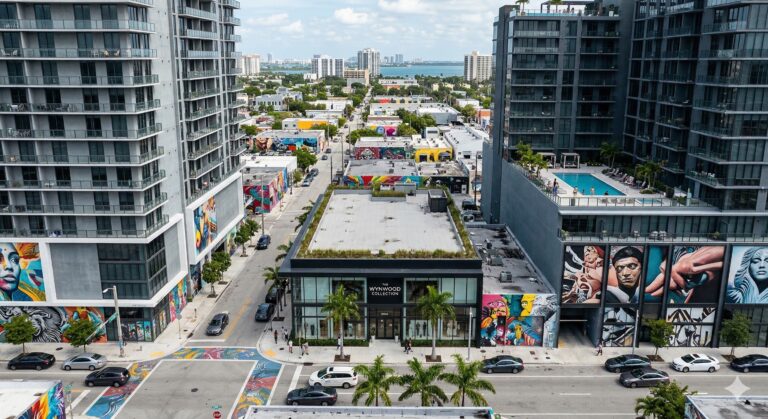
The ordinance also applies to future fixed-rail lines, not just the existing system. Planned corridors including the Northeast Corridor, with proposed stations in Wynwood, the Design District, and Little Haiti, are in scope once those lines are formally designated.
Private applications for TOD Node designation open during the semi-annual filing windows. Developers with eligible properties do not need to wait for the City to initiate the process.
What to Do Now
TSND is not a blanket upzoning. It is a framework with specific eligibility rules, filing windows, public benefit obligations, and a Node designation process still rolling out neighborhood by neighborhood.
The ordinance has already been amended once. Projects are in demolition in Little River. Allapattah designations are pending. The rest of the Metrorail corridor follows.
If you own or are evaluating property within one mile of a Metrorail station or planned rail corridor in the City of Miami, the time to understand your eligibility is before the next Node designation makes it obvious to everyone else.
Reach out. We track these designations and can give you a direct read on what TSND means for a specific address.
This post is for informational purposes only and does not constitute legal or zoning advice. TSND eligibility, Node designation status, and applicable development standards require confirmation with a qualified land use attorney and City of Miami planning staff. Ordinance language has been amended since original passage; verify current standards before relying on any published summary.